

Witness Preparation
Accessing Memory, Truth, and Identity Under Pressure
Honoring the Past. Articulating the Present. Reconciling the Future.
Testimony is not a rehearsal exercise. And it’s not simply the recall of an event.
It is the reconstruction of lived experience under scrutiny.
When someone prepares for a deposition or trial, they are not just being asked what happened. They are being asked to revisit who they were before disruption, what changed in a single moment or over time, and how their future has been altered.
When someone sits for a deposition or trial, they are not simply recalling facts. They are accessing memory, emotion, identity, and meaning in real time, often while their nervous system is activated by confrontation, evaluation, or fear.
That process is neurological.
It is emotional.
It is psychological.
It is relational.
It is identity-based.
And every person carries that experience differently.
Some protect themselves by minimizing.
Some protect themselves by intellectualizing.
Some disconnect from emotion entirely.
Others feel it so deeply that words collapse.
My role is to create the conditions for truth to surface in a way that is stable, coherent, and deeply human.
Every person processes and expresses these dimensions differently.
Some recall in images.
Some recall in body sensation.
Some recall in sequence.
Some recall in fragments.
Some intellectualize emotion.
Some feel emotion before they can name it.
Under pressure, these patterns intensify.
My role is to understand how each encodes experience, regulates stress, and communicates, and then help them access and articulate their truth with coherence and stability.
This is not scripting. This is not performance preparation.
It is the structured process of translating raw facts into a coherent, human narrative that jurors can understand and feel.
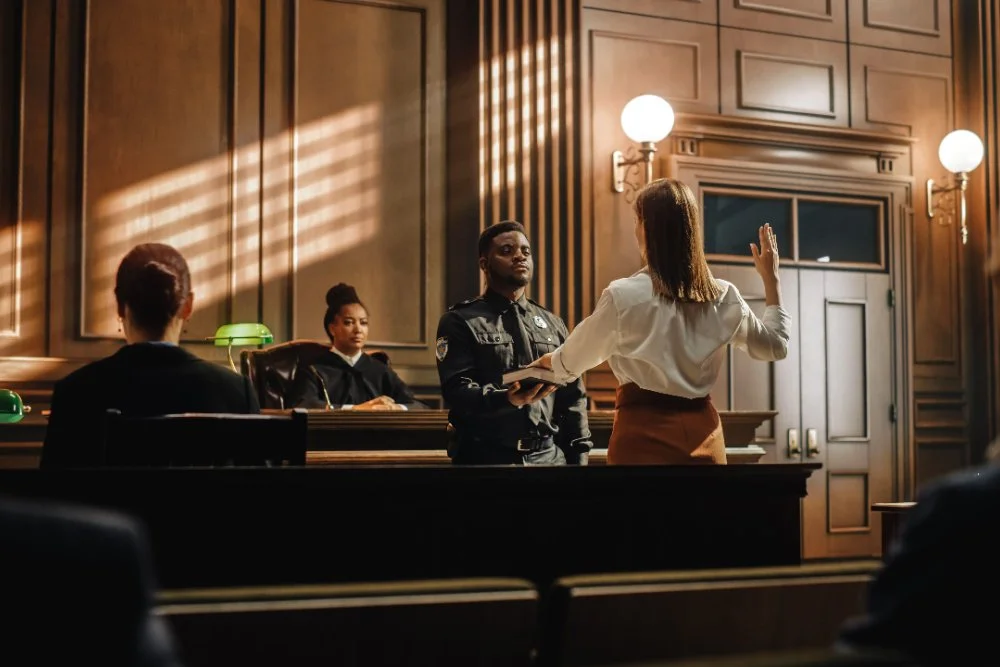
The 5 Stages of Narrative Integration
Every case we prepare moves through five distinct stages. These stages reflect how disruption is experienced psychologically and emotionally, not just legally.
Each stage requires different levels of vulnerability and different types of recall.
-
Before impact, there was identity.
To understand change, we must first establish baseline.
In this stage, we clarify:
Daily routines and rhythms
Physical capacity
Work identity and professional trajectory
Emotional stability
Relationships and social engagement
Long-term plans and expectations
This is not background information.
It is psychological anchoring.Without a grounded understanding of who someone was before the disruption, jurors cannot accurately measure what was altered.
-
The event is often encoded differently than everyday memory.
Some people remember it visually.
Some remember a single sensory detail.
Some remember bodily shock before narrative clarity.
Some remember confusion more than sequence.
Here, we carefully reconstruct:
What was seen, heard, or felt
What was understood in the moment
What the body registered
What emotions surfaced
We slow down fragmented memory.
We stabilize overwhelming memory.
We organize the sequence without altering authenticity.The objective is coherence, not dramatization and not minimization.
-
The hours, days, and weeks following an event often carry profound shifts that witnesses overlook.
This stage examines:
Sleep disruption
Changes in concentration
Emotional reactivity
Physical limitation
Fear or hypervigilance
Work or relational strain
Psychologically, this is where the nervous system begins recalibrating. Many individuals suppress this period because it feels chaotic or difficult to articulate. Yet this stage often explains the beginning of long-term impact.
We bring clarity to it.
-
This stage requires the greatest emotional precision.
Impact is rarely confined to physical injury. It extends into identity, relationships, confidence, career path, and self-perception.
We examine:
Ongoing limitations
Chronic pain or persistent symptoms
Shifts in identity or self-image
Career disruption
Altered social roles
Emotional or psychological strain
Some witnesses minimize here to avoid appearing dramatic.
Others struggle to translate internal loss into language.My role is to help articulate impact in grounded, specific, credible terms, in their words, not mine.
-
This stage confronts permanence.
What does life look like now?
What will never return?
What has been altered long-term?We explore:
Interrupted plans
Modified goals
New limitations
Adaptations required
Identity recalibration
This stage is deeply vulnerable because it touches grief and uncertainty. It must be accessed carefully and communicated with stability.
Vulnerability here does not mean emotional display.
It means alignment between internal reality and external language.
Vulnerability, Communication, and Presence
Every witness communicates through:
Word choice
Pace
Tone
Silence
Eye contact
Posture
Emotional range
Vulnerability in testimony does not mean emotional display.
It means alignment.
When your memory, your emotional truth, your body language, and your words are congruent, credibility stabilizes. When they are fractured, jurors feel it instantly.
I do not give you language. I help you remove what interferes with your own.
Interference from shame.
From fear of judgment.
From minimizing your loss.
From over-explaining.
From bracing yourself against scrutiny.
When that interference is reduced, your story emerges, in your voice, in your cadence, in your way of speaking. That is what resonates.
The Standard
Witness preparation is not about performance.
It is about helping someone access who they were, what occurred, how it changed them, and who they are becoming, ensuring that memory, emotion, identity, and communication remain integrated under pressure and scrutiny.
Every person remembers differently.
Every nervous system responds differently.
Every life carries a different before and after.
Witness preparation, at its highest level, is the process of honoring that complexity and helping it surface with dignity and authenticity.
Let’s Work Together
If you're interested in working with us, complete the form with a few details about your project. We'll review your message and get back to you within 24 hours.